设备节点
最后更新
输入和输出
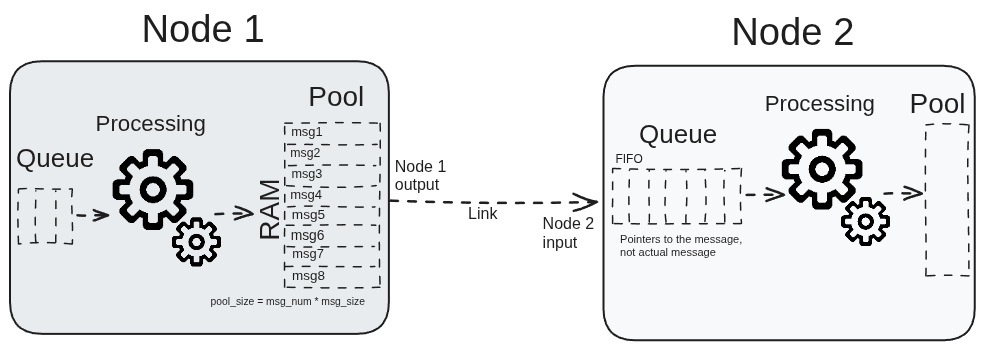
节点输入
input.setBlocking(bool) 和 input.setQueueSize(num),例如 edgeDetector.inputImage.setQueueSize(10)。如果输入队列已满,输入的行为取决于阻塞属性。假设我们已将 ColorCamera preview 输出与 NeuralNetwork input 输入链接。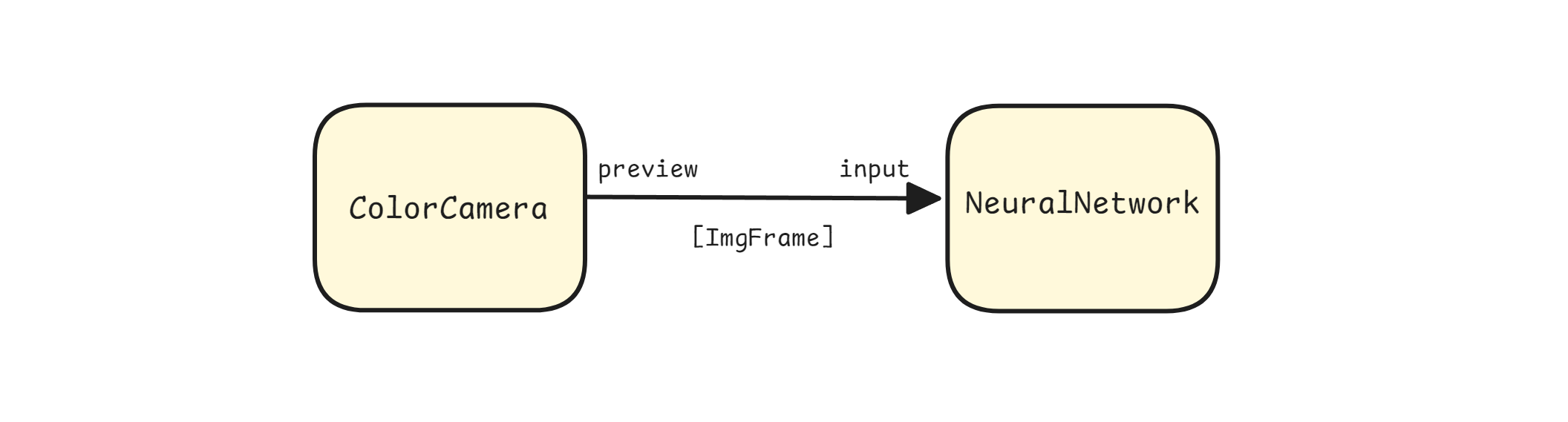
节点输出
管道冻结
当池中的所有消息都已发送出去但尚未返回时,节点将阻塞(冻结)并等待消息被释放(未被管道中的任何节点使用)。
class
dai::Node
using
variable
Id id
Id of node. Assigned after being placed on the pipeline.
variable
Id inputId
variable
Id outputId
variable
std::string alias
alias or name
function
Node(const Node &)function
function
Node(Node &&)function
function
std::string createUniqueInputName()function
std::string createUniqueOutputName()function
Pipeline getParentPipeline()function
const Pipeline getParentPipeline()inline function
std::string getAlias()Get alias.
inline function
void setAlias(std::string alias)Set alias.
function
const char * getName()Retrieves nodes name.
inline function
void start()Start node execution.
inline function
void wait()Wait for node to finish execution.
inline function
void stop()Stop node execution.
function
void stopPipeline()function
void buildStage1()Build stages;.
function
void buildStage2()function
void buildStage3()function
void postBuildStage()function
std::vector< Output > getOutputs()Retrieves all nodes outputs.
function
std::vector< Input > getInputs()Retrieves all nodes inputs.
function
std::vector< Output * > getOutputRefs()Retrieves reference to node outputs.
function
std::vector< const Output * > getOutputRefs()Retrieves reference to node outputs.
function
std::vector< Input * > getInputRefs()Retrieves reference to node inputs.
function
std::vector< const Input * > getInputRefs()Retrieves reference to node inputs.
function
std::vector< OutputMap * > getOutputMapRefs()Retrieves reference to node outputs.
function
std::vector< InputMap * > getInputMapRefs()Retrieves reference to node inputs.
function
Output * getOutputRef(const std::string & name)Retrieves reference to specific output.
function
Output * getOutputRef(const std::string & group, const std::string & name)function
Input * getInputRef(const std::string & name)Retrieves reference to specific input.
function
Input * getInputRef(const std::string & group, const std::string & name)function
OutputMap * getOutputMapRef(const std::string & group)Retrieves reference to specific output map.
function
InputMap * getInputMapRef(const std::string & group)Retrieves reference to specific input map.
function
bool isSourceNode()function
~Node()function
const AssetManager & getAssetManager()function
AssetManager & getAssetManager()function
std::vector< uint8_t > loadResource(const std::filesystem::path & uri)Loads resource specified by URI and returns its data.
function
std::vector< uint8_t > moveResource(const std::filesystem::path & uri)Moves the resource out.
inline function
function
void add(const std::shared_ptr< Node > & node)Add existing node to nodeMap.
function
std::vector< std::shared_ptr< Node > > getAllNodes()function
function
function
void remove(const std::shared_ptr< Node > & node)function
ConnectionMap getConnectionMap()function
void link(const Node::Output & out, const Node::Input & in)function
void unlink(const Node::Output & out, const Node::Input & in)function
void link(std::shared_ptr< Node > in)Get a reference to internal node map.
function
Node::Output * requestOutput(const Capability & capability, bool onHost)function
std::vector< std::pair< Input &, std::shared_ptr< Capability > > > getRequiredInputs()function
bool runOnHost()Returns true or false whether the node should be run on host or not.
inline function
bool isBuiltInNode()Returns whether this node is provided by depthai-core.
inline function
const NodeMap & getNodeMap()inline function
void buildInternal()Function called from within the create function to build the node. This function is useful for initialization, setting up inputs and outputs = stuff that cannot be perform in the constuctor.
struct
dai::Node::Connection
variable
Id outputId
variable
std::string outputName
variable
std::string outputGroup
variable
Id inputId
variable
std::string inputName
variable
std::string inputGroup
function
function
Connection(const ConnectionInternal & c)function
bool operator==(const Connection & rhs)struct
dai::Node::ConnectionInternal
variable
std::weak_ptr< Node > outputNode
variable
std::string outputName
variable
std::string outputGroup
variable
std::weak_ptr< Node > inputNode
variable
std::string inputName
variable
std::string inputGroup
variable
Output * out
variable
Input * in
function
function
bool operator==(const ConnectionInternal & rhs)struct
dai::Node::ConnectionInternal::Hash
function
size_t operator()(const dai::Node::ConnectionInternal & obj)struct
dai::Node::DatatypeHierarchy
variable
DatatypeEnum datatype
variable
bool descendants
inline function
DatatypeHierarchy(DatatypeEnum d, bool c)class
dai::Node::Input
variable
std::vector< DatatypeHierarchy > possibleDatatypes
function
~Input()inline explicit function
Input(Node & par, InputDescription desc, bool ref)inline function
const Node & getParent()Get the parent node
inline function
Node & getParent()Get the parent node
inline function
Type getType()Get type
function
std::string toString()Input to string representation
function
void setWaitForMessage(bool waitForMessage)Overrides default wait for message behavior. Applicable for nodes with multiple inputs. Specifies behavior whether to wait for this input when a Node processes certain data or not.
Parameters
- waitForMessage: Whether to wait for message to arrive to this input or not
function
bool getWaitForMessage()Get behavior whether to wait for this input when a Node processes certain data or not
Returns
Whether to wait for message to arrive to this input or not
function
std::vector< DatatypeHierarchy > getPossibleDatatypes()Get possible datatypes that can be received
function
void setPossibleDatatypes(std::vector< DatatypeHierarchy > types)Set possible datatypes that can be received
function
void setReusePreviousMessage(bool reusePreviousMessage)Equivalent to setWaitForMessage but with inverted logic.
function
bool getReusePreviousMessage()Equivalent to getWaitForMessage but with inverted logic.
function
void setGroup(std::string group)Set group name for this input
function
std::string getGroup()Get group name for this input
function
bool isConnected()Check if this input is connected
function
std::shared_ptr< InputQueue > createInputQueue(unsigned int maxSize, bool blocking)Create an shared pointer to an input queue that can be used to send messages to this input from onhost.
Parameters
- maxSize: Maximum size of the input queue
- blocking: Whether the input queue should block when full
Returns
std::shared_ptr<InputQueue>: shared pointer to an input queue
function
std::shared_ptr< dai::node::internal::XLinkInBridge > getXLinkBridge()Get XLink bridge associated with this input (only valid for device inputs after pipeline build)
Returns
std::shared_ptr<dai::node::internal::XLinkInBridge>: pointer to the XLink bridge or nullptr if not applicable
function
std::shared_ptr< Device > getSourceDevice()Get the device that produces the data arriving at this input, resolved at pipeline build.
Returns
The source device, or nullptr when the upstream node runs on the host. Throws if this input is connected to sources on more than one device.
enum
Type
enumerator
SReceiver
enumerator
MReceiver
struct
dai::Node::InputDescription
variable
std::string name
variable
std::string group
variable
bool blocking
variable
int queueSize
variable
std::vector< DatatypeHierarchy > types DEFAULT_TYPES
variable
bool waitForMessage
class
dai::Node::InputMap
variable
std::string name
function
InputMap(Node & parent, InputDescription defaultInput)function
InputMap(Node & parent, std::string name, InputDescription defaultInput)function
Input & operator[](const std::string & key)Create or modify an input.
function
Input & operator[](std::pair< std::string, std::string > groupKey)Create or modify an input with specified group.
function
bool has(const std::string & key)function
std::map< std::string, std::shared_ptr< Device > > getSourceDevices()Get the source device of every input in this map, resolved at pipeline build.
Returns
Map of input name to source device; nullptr when the source runs on the host. Inputs created with a group are keyed "<group>/<name>".
class
dai::Node::Output
function
~Output()inline function
Output(Node & par, OutputDescription desc, bool ref)inline function
Node & getParent()inline function
const Node & getParent()function
std::string toString()Output to string representation.
inline function
std::string getName()Get name of the output
inline function
std::string getGroup()Get group of the output
inline function
void setGroup(std::string group)Set group name for this output
inline function
void setName(std::string name)Set name for this output
inline function
Type getType()Get type of the output
function
std::vector< DatatypeHierarchy > getPossibleDatatypes()Get possible datatypes that can be sent
function
void setPossibleDatatypes(std::vector< DatatypeHierarchy > types)Set possible datatypes that can be sent
function
bool isSamePipeline(const Input & in)Check if this output and given input are on the same pipeline.
See also
canConnect for checking if connection is possible
Returns
True if output and input are on the same pipeline
function
bool canConnect(const Input & in)Check if connection is possible
Parameters
- in: Input to connect to
Returns
True if connection is possible, false otherwise
function
std::vector< ConnectionInternal > getConnections()Retrieve all connections from this output
Returns
Vector of connections
inline function
std::vector< QueueConnection > getQueueConnections()Retrieve all queue connections from this output
Returns
Vector of queue connections
function
std::shared_ptr< dai::MessageQueue > createOutputQueue(unsigned int maxSize, bool blocking)Construct and return a shared pointer to an output message queue.
Parameters
- maxSize: Maximum size of the output queue
- blocking: Whether the output queue should block when full
Returns
std::shared_ptr<dai::MessageQueue>: shared pointer to an output queue
function
void link(Input & in)Link current output to input.Throws an error if this output cannot be linked to given input, or if they are already linked
Parameters
- in: Input to link to
function
void link(std::shared_ptr< Node > in)function
void unlink(Input & in)Unlink a previously linked connectionThrows an error if not linked.
Parameters
- in: Input from which to unlink from
function
void send(const std::shared_ptr< ADatatype > & msg)Sends a Message to all connected inputs
Parameters
- msg: Message to send to all connected inputs
function
bool trySend(const std::shared_ptr< ADatatype > & msg)Try sending a message to all connected inputs
Parameters
- msg: Message to send to all connected inputs
Returns
True if ALL connected inputs got the message, false otherwise
function
std::shared_ptr< dai::node::internal::XLinkOutBridge > getXLinkBridge()Get XLink bridge associated with this output (only valid for device outputs after pipeline build)
Returns
std::shared_ptr<dai::node::internal::XLinkOutBridge>: pointer to the XLink bridge or nullptr if not applicable
struct
dai::Node::Output::QueueConnection
variable
Output * output
variable
std::shared_ptr< MessageQueue > queue
inline function
bool operator==(const QueueConnection & rhs)enum
Type
enumerator
MSender
enumerator
SSender
struct
dai::Node::OutputDescription
variable
std::string name
variable
std::string group
variable
std::vector< DatatypeHierarchy > types DEFAULT_TYPES
class
dai::Node::OutputMap
variable
std::string name
function
OutputMap(Node & parent, std::string name, const OutputDescription & defaultOutput, bool ref)function
OutputMap(Node & parent, OutputDescription defaultOutput, bool ref)function
Output & operator[](const std::string & key)Create or modify an output.
function
Output & operator[](std::pair< std::string, std::string > groupKey)Create or modify an output with specified group.
struct
dai::Node::PairHash
inline function
std::size_t operator()(const std::pair< T1, T2 > & pair)